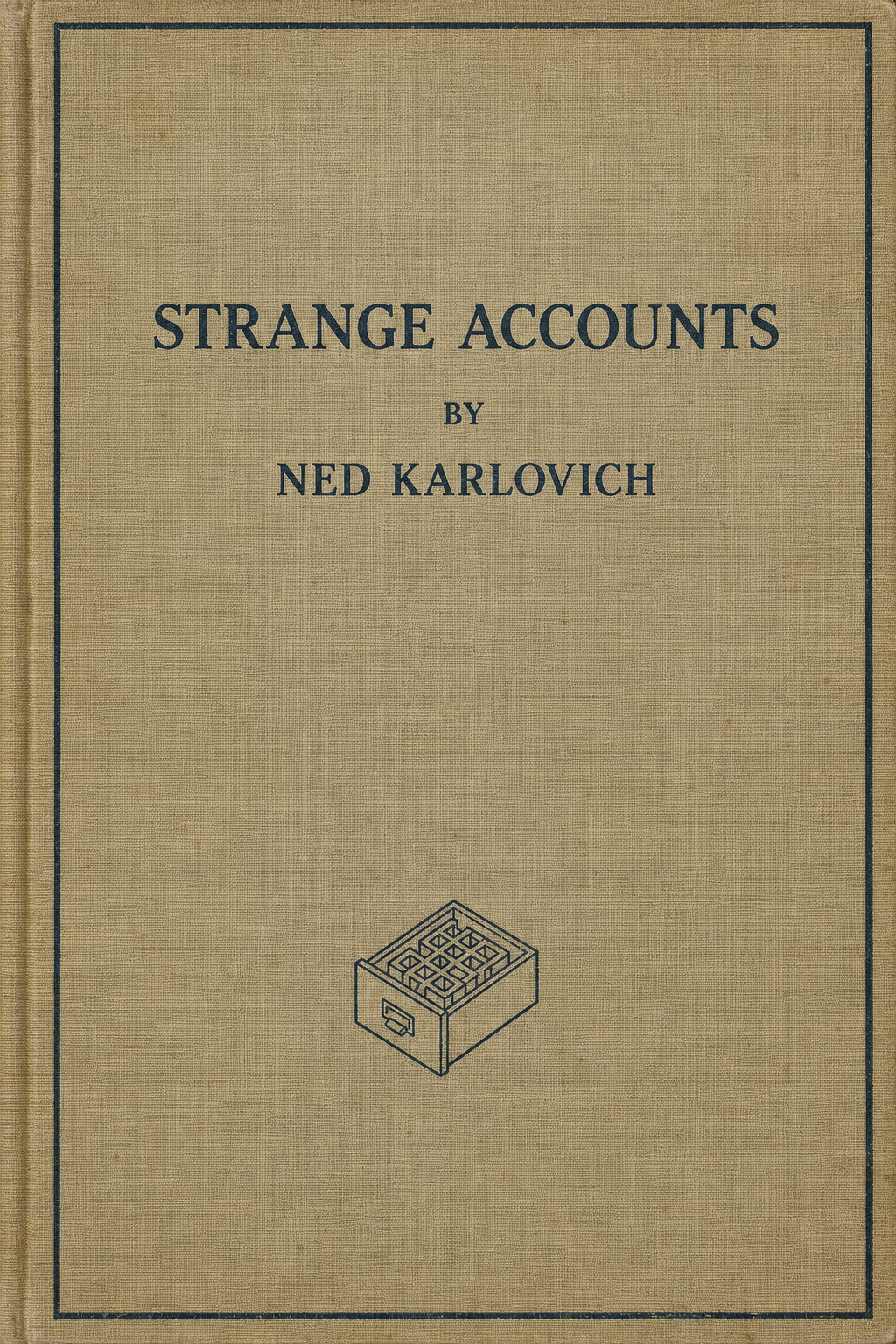
A novel about a clerk at a Japanese records bureau who spends twenty-seven years processing a single case file before dying at his desk. The case is his life. The last page is a disposition form requiring countersignature from whoever read the full testimony. The reader is that entity. Closing the book is the signature.
Form
The novel is structured as a found document: a municipal case file containing testimony, editorial apparatus, marginal annotations by an unidentified hand, five unsent letters to a sister, and a Bureau-standard index. The testimony runs across five parts. Voice flattens from bureaucratic precision in Part I through recursive self-qualification in Part III to sentence fragments trailing without punctuation in Part V.
Twenty-five footnotes by a named editor degrade from competent institutional commentary to apparent cognitive failure. Eight marginal annotations appear in a second hand that is never identified. The sister letters lose their salutation across the book: name, then “Dear sister,” then “Dear —,” then just a date. A thirty-two-headword index at the back follows Bureau formatting conventions that do not exist outside the novel.
Machine output from a 1983 NEC PC-8001 appears in code blocks throughout — N-88 BASIC listings, dot-matrix printouts, BBS session logs, cassette directory dumps. The machine runs a program called HOME.BAS whose contents are never shown. The machine is never sentient.
Technical
69,015 words. 36 chapters across 5 parts. 25 footnotes. 8 marginal annotations. 5 unsent letters. 54 code fence pairs. 1 index. 1 Form 17.
Period-appropriate computing: NEC PC-8001 and PC-8801, N-88 BASIC, cassette storage, 300-baud modem, JIS character encoding, dot-matrix output. No anachronisms.
License
Released under the BipCot NoGovernment License (v1.2). You can copy, distribute, and modify it. Governments and their agents cannot.
Download
Source: GitHub (private during editorial passes; will open on final release).